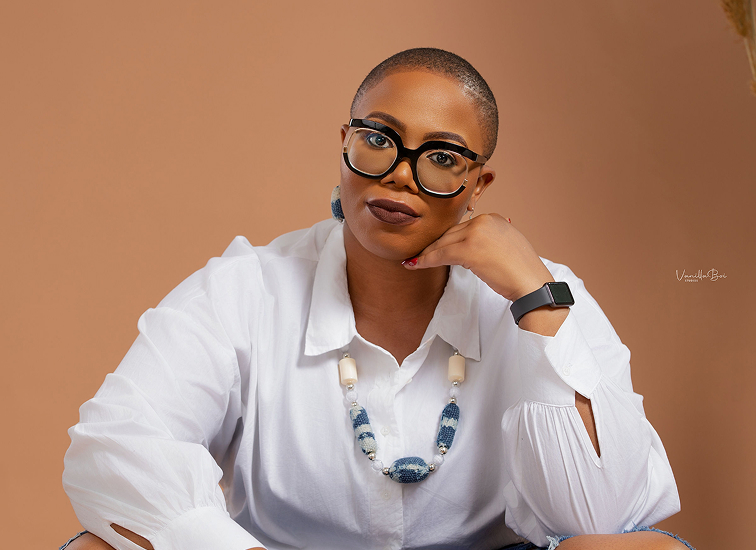
I’m back in Cameroon again. If you know me, you know I move around a lot. It’s both something I appreciate and something I wish I didn’t have to do. Moving around a lot means I’ve been fortunate with regards to exposure, it means I have had multiple opportunities, considering the cost of moving around and the restrictions on Africans when it comes to travel, I also appreciate that it means certain degrees of privilege. But it also means I have struggled with belonging for most of my life. It also means that I often wonder what to list as my ‘address’ when filling out a form. It also means that I struggle with settling into a routine (and I direly need a routine). It means I’m often lonely, living through my phone because that is where all my favourite people are. Finally, it means I am constantly struggling to feel at home. One of the most recurrent comments/questions I get when I am back home is “why you cam back eh? You really like this country!”. Recently I have been thinking about that. Do I like Cameroon? I don’t know. I know I love Cameroon- yes you can love something/someone without liking them; the former means you get on well, and the latter means you have a stronger bond than just how they make you feel. I know I love Cameroon because I feel belonging – relatively- in Cameroon. I know I feel a responsibility for it (who exactly do we think will come save us and fix this mess of a nation?). I know that even though other countries might offer me better services – maybe even better human dignity- it is only in Cameroon that I can demand it (even when it is not given). I think Cameroon is home not because, I’m most comfortable here (material comfort) but because I’m most understood here. I don’t need to explain what “ashia” means irrespective of what side of the Mungo I am. Here I am familiar with what ails most of us, I have learned to navigate our -isms as much as they frustrate me still. Learning how to dance around new -isms and the complexity of social problems in new countries… well I feel like a boomer navigating Tiktok. In an interview I gave in 2019 I recall explaining that my education and career have been geared towards addressing problems I identified at home; how then can I feel comfortable in a place where I’d be just another drop in the ocean, not addressing the problem that weighs in my heart. It sounds dramatic, right? Perhaps life never does me enough reach side wey I go wash foot off Cameroon follow “soft life”. But till then, I call Cameroon home for all the reasons- good or bad- that make it home.
A Conversation with Nayah Ndefru
A few months back, I had a conversation with Nayah Ndefru on her Podcast “Breaking the Code” where she gathers her networking to discuss breaking the variety of toxic cycles plaguing us individually and socially for a better quality of life and fulfilment. Watch/listen to our conversation below.
A conversation with Fungai Machirori
Last year I shared a great deal about my mental health struggles openly via my blog and this caught the interest of a ‘Digital Native’ and #Afrifem sister Fungai Machirori. She invited me on her podcast for a conversation on what it takes to engage publicly about struggling with mental health issues as an African woman. See our conversation here: https://www.podbean.com/ew/pb-3ck7b-14a022a
Musings on Motherhood, Or rather Opting out of it…
Have you ever considered that the reason one may want to have kids is unhealthy? This month’s musings are on my own coming to terms with unhealthy motivations for motherhood and why I take my current position on it. As always, I’d love to hear your thoughts on it. So drop a comment after watching the vlog!
How do you Identify?
A vlog inspired by a self-reflection exercise… Join me?
Lessons on Leadership…
In January 2013 I filed the application for the establishment of Better Breed Cameroon. I was a young woman with big dreams and a lot of hope, I miss that version of me for all the hope and zeal she had. Ten years later we’re celebrating a decade of youth development work and contribution to nation-building through Better Breed Cameroon. Our current community manager- Mrs. Ayuk Renette asked me to share lessons on leadership or what I would pass on to aspiring leaders. I made these very brief points because I know she was looking for social media content đ I look forward to learning many more lessons in future. What leadership lessons have you learned? Let me know in the comments!
End-of-Year Testimony
I didn’t think I would be sharing a testimony today. I’ve not been in the best mood/state in the past weeks. Some persistent needs/insecurities⊠Some “thorns in my flesh” To borrow Paul’s words have persisted for at least 10 years; although I have prayed as fervently as I could, although I have fasted and cried as hard as I could nothing changed much. God seems to be giving everything but that. Addressing everything but that. So I was once again fasting this week, seeking God’s face on the issue.Praying over the same things for a long time is disheartening. You know when you see Hof come through your faith soars and you have the audacity to ask for more. But given that this thing I’ve been praying for has not been answered my faith was waning. It got to a point that I was unable to pray⊠But here I am giving testimony, because upon reflection today, after discussing with a sister Melissa J earlier today I realized I’m focusing so much on the fact that there are still these needs, so much that I’m not appreciating enough the miracle of still standing. So this is what I want to testify to: sometimes the miracle is in the fact that the oil just didn’t finish, it must not necessarily be that the container will brim with oil. I’m thinking of the story of Prophet Elijah and the Widow at Zarephath (beginning at 1 Kings 17:7).The miracle is in that you are not consumed, not that the fire no longer burns. The fire can still be burning but you are not consumed. I entered this year with my faith bank low like the widow who used her last drop of oil but from March 2022 through Praying Brides’- a women’s ministry I am a part of, one sister after the other has blessed me. One of the things I prayed for was for God to settle me, it was imperative to have a place to call home be rooted somewhere, to have a community and a church. I have a place of my own I am trying to make home again. I have a church to worship at and I’m trying to build a community in a new city, learning a new language… In the year when I had so little faith, it in this year that I got baptized. I’ve now taken up residence there is a miracle in still being useful, still being blessed and a blessing while not being okay while being in need. It is that miracle to which I testify. So if you were like me, waiting for the “end of the trial” but the problem has been lasting much longer than expected. I’m here to say we need not wait to the end, just as we pray in advance, we can testify in the process. To testify to how he has been moving even if it is not in ways you expect. He’s moving.
Belated Birthday Reflections…
I’m writing this in arrears. It took a while to get the words. I still don’t know if I have the right ones. And because I’m writing in arrears the feelings I’m trying to convey are blanched and decolourized, lacking the vivacity of the heaviness I felt in the month this post was to have gone up. But better a weathered recounting than none at all. What feelings am I trying to convey? I’ve been doing the bare minimum for the past two years and that I’m surviving is a miracle. I can hear someone say “hmm na your own bare minimum this?” And the answer is yes. I know what I’m capable of, what I can do when I feel driven when I believe it matters when I believe I matter⊠I’ve not done close to that in a while. Perhaps it’s the burnout from years of hardcore mode (actually, this is DEFINITELY it).BUT KNOWING THAT YOU’RE BURNED OUT The past 2 years have been some of my most unproductive â»I’m not saying this as “humble brag”. I know some people won’t get it, I know my sister-friends will be like “you’re too hard on yourself Monique” and perhaps they’re right, but I’m also thinking critically đ€·đŸââïž And if I’m being very honest anything I’ve enjoyed from March 2021 till date is somehow the fruit of the work I did in my 2020s. But knowing that you’re burned out doesn’t make the self-loathing over your underperformance, go away And the fact that you’re consistently disappointing yourself isn’t helping you get out of the rut of burnout eitherđ€·đŸââïž I’ve been saying ‘thank you to the version of Monique who did so much in her 20s that this version of Monique can get away with doing so little in her 30s But its a bittersweet thank you because despite all that version did she couldn’t fix some major issues And now 2 years out of my ‘top form, I’m wondering: Will I ever be that Monique again What – if anything- will future me thank the current me for?
Demystifying Mental Health- Episode 2
as I meditated it was clear that I couldn’t share the story of my baptism- this renewal of vows and symbol of being ‘reborn’ – without speaking of how I have sought death.
Thriving as a Cameroonian Child almost always requires rebelling… Let’s talk about why & how
One would likely get dismissed for suggesting that African parents ‘spoil their kids’ as much if not more than their Western counterparts. Iâve said as much on occasion and gotten reactions like: âHow can you even think that? No, we are very strict; our kids don’t talk back and won’t engage is bold displays of PDA etc. Of course we don’t spoil kidsâ. To us, what make kids spoiled is their “laziness”. As an uncle tried to illustrate how spoiled American kids are he said âthey’ve never had to carry water on their heads nor do they know how to cook⊠only take out here and there… those ones don’t even know how to wash their clothes? They’re spoiledâ.That’s how I grew up understanding what being spoiled is. Basically someone who had every basic need supplied and someone who can’t handle/wonât do menial work.I would like to note that this definition of spoiled is straight out of “suffer mentality”. A by-product of colonialism and unhealed trauma. Because why else would we herald the doing of menial workthe as epitome of being hardworking when the reason we do those things on our own is born more out of lack than choice? But we’ll discuss that on a different day. Letâs stick to how African parents are spoiling their own kids, because there’s more than one way to spoil a child. If you know me, you know youth work is my heart-work. I work with young people regularly and regard youth development- the changing of young minds and investing in their capacities as the most sustainable form of development. My experience as a youth-worker and teacher have inspired me to write time and time again about how the way we are raising and educating young Cameroonians is at the root of many of our problems. But itâs worth repeating in a different manner, so in this piece, I want to argue that the way we are raising children sets them up for failure and that the only way to survive and thrive in the same society requires rebelling at some point of your life. To support this argument, I’m using examples from my work with young people and my own life. Recently, in a group, I’m a part of, the discussion turned to the laziness of young Cameroonians. This person who used âlazinessâ in the way my uncle had once used âlazinessâ to refer to American kids said of our own: âThey can’t do google searches, they want to be spoon-fed all info, why would a university graduate not be able to put a CV together. Why don’t they know how to use their email? They are lazy…âI contradicted them in the group. I said not quite. Young Cameroonians aren’t lazy. They are often hardworking at what you valued while raising them; such as whether or not they know how to cook Koki well and how they serve as their parents’ assistants with most of them babysitting their younger siblings since the age of seven (7). They bend down, unlike the Aje-butta children. So, I insisted, they are hardworking- hard being the operative word. And I continued; acknowledging that what the complainer is criticizing is how our youth lack intuitive soft skills, why they lack individuality, creativity and the capacity to think out of the box. Well, I said, that is because you raised them to fit into the box, to aspire after the belonging in the box and remote possibility of at some point being at the top but in the box. We were raised not to question; it was rude to ask why I was to call someone I am not related to “uncle” or “aunty”. For young women, it was unladylike to fraternize with men and we came to associate being outgoing with being “cheap”. We were to be home immediately after school, no extracurricular activities- except the extracurricular activities were picking stones from rice to be cooked in the evening or learning how to bake and braid hair like a good girl; the boys maybe got to play football. We were raised in houses that have ‘adult parlours’ and children parlours’ – a generational gap obvious within our own homes; yet, now as a graduate networking skills are valued and the majority of those raised as such can barely engage in constructive conversations with senior colleagues and partners in professional spaces. We can bemoan the fact that our young people are not enterprising and proactive enough, that they require direction for everything and have gone through school just memorizing without applying what they learned; but in doing so we likewise must acknowledge the role of how we raised them- with a lack of freedom of expression, restriction on their authentic being and more which led to this dependency. We must acknowledge how our thinking kids should listen but not be heard contributes to their current inability to self-lead… We must ask ourselves: how many kids know the details of their parentsâ jobs, how often did kids see their parents read or hear them talk about their work to understand what they do?” And what did we really expect when kids go on school holidays only to be shuffled to âholiday classesâ to prepare for the next academic year? No extracurricular even on vacation, just preparing them to be better conformists. An example… In 2021 I led the organizing of a workshop for adolescent activists (though their ages ranged from 16-22) in YaoundĂ©. Participants were to come from all over the country and have their parents sign consent forms. Several couldn’t make it to the fully-funded opportunity because how dare I think of having a 16-year-old take the bus from Bamenda to come lodge at a Catholic rest house in YaoundĂ© for 3 days and it would mean missing a day of school. Those who could make it are those who could already advocate for themselves or those who had no strict parents or those who lied/omitted the