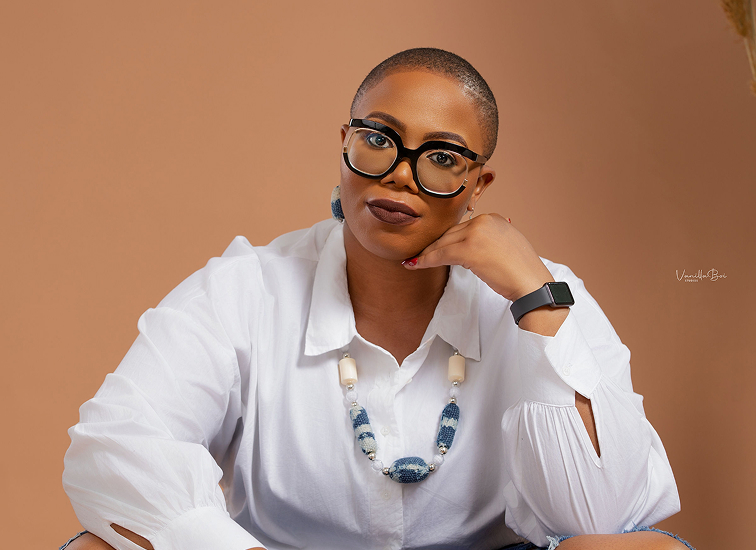
A few months back, I had a conversation with Nayah Ndefru on her Podcast “Breaking the Code” where she gathers her networking to discuss breaking the variety of toxic cycles plaguing us individually and socially for a better quality of life and fulfilment. Watch/listen to our conversation below.
A conversation with Fungai Machirori
Last year I shared a great deal about my mental health struggles openly via my blog and this caught the interest of a ‘Digital Native’ and #Afrifem sister Fungai Machirori. She invited me on her podcast for a conversation on what it takes to engage publicly about struggling with mental health issues as an African woman. See our conversation here: https://www.podbean.com/ew/pb-3ck7b-14a022a
Musings on Motherhood, Or rather Opting out of it…
Have you ever considered that the reason one may want to have kids is unhealthy? This month’s musings are on my own coming to terms with unhealthy motivations for motherhood and why I take my current position on it. As always, I’d love to hear your thoughts on it. So drop a comment after watching the vlog!
How do you Identify?
A vlog inspired by a self-reflection exercise… Join me?
Lessons on Leadership…
In January 2013 I filed the application for the establishment of Better Breed Cameroon. I was a young woman with big dreams and a lot of hope, I miss that version of me for all the hope and zeal she had. Ten years later we’re celebrating a decade of youth development work and contribution to nation-building through Better Breed Cameroon. Our current community manager- Mrs. Ayuk Renette asked me to share lessons on leadership or what I would pass on to aspiring leaders. I made these very brief points because I know she was looking for social media content đ I look forward to learning many more lessons in future. What leadership lessons have you learned? Let me know in the comments!
A Year of Self-Love?
One of my favourite quotes is by Zora Neale Hurston and it goes: There are years that ask questions and there are years that answer. I am praying that 2023 is one of the years that answers… A sister-friend has a small ministry she calls “Jesus Parties”. She, like many of us, grew up in a society that has likened sin to fun and Christ to boring. She felt called to re-create the jubilation and joyful gathering of the saints the book of Revelations said would come. I attended my first “Jesus Party” in December of 2022. I’m going to be honest and say it could have be better but for a young initiative, one that was so needed I did appreciate the effort. I appreciated that this was just a space for healthy fun, we need more of such spaces. Spaces where teens can play games that don’t involve “I dare you to kiss so and so”, spaces with more creative recreation that is not just eating and drinking. But that’s not the point of this blog. At that event, the Holy Spirit seemed to take over a professional acquaintance, we went from fun to prophesy in a quick minute. This acquaintance- a guy who knows very little about me- knelt at my feet, got up and then said: “I keep getting the word self-love for you, I don’t understand it. I wonder if I heard well”. I, an overthinker with an analytical mind, had raised an eyebrow at this guy kneeling at my feet. My first thought was “Why me? Is this necessary?” I recall praying as he knelt that, God better prove his actions sincere. When he later mentioned hearing that word for me, I knew that he didn’t know me well enough to have connived that word that spoke of my inner turmoil. I took the word and put it away. I already knew I needed to love myself. The issue has always been how. Writing the rest of this is going to be difficult so perhaps I’ll make a vlog to compliment this piece… Now that I’ve made the video, with me in good lighting, looking neat, with no make-up but still lip gloss, and my large form not that apparent I can imagine some people will be like “What insecurity does this one even have”. The thing about insecurities is that they aren’t entirely logical. But they like hope are hard to kill. My insecurity is not done away with by dressing up and looking good, because even then, I have enough life experience that affirms that at my best dressed/most conventionally attractive I was not enough for those who I needed to love me. Learning to love myself again, to love myself better goes beyond loving how I look when I dress up, to loving myself in between looks. It means knowing at my worst I’m still worthy, just as worthy as when I am all dolled up. It means deciding to give myself a whole love, or to try to give that to myself each day. **** On Eating Disorders Why do you say you have an eating disorder? Well eating disorders can be understood as psychologically-based abnormal eating behaviours that negatively affect a person’s physical or mental health. Basically, ones eating and overall relationship with food is affected by a mental disorder and that in turn further affects them physically and mentally. I first came across the concept of eating disorders at age 10/11 while I was in the U.S. and watched classmates stick spoons down their throats to throw up what they ate at lunch. Weeks later the school counselor would have a talk with us about bulimia. I recall thinking âoh itâs a bad thing, but itâs an effective thingâ and I wished I could try it. I couldnât. Itâs really very hard for me to throw up lol I sure tried. In that setting my knowledge of eating disorders was limited to Bulimia and Anorexia, I didnât think of my emotional over-eating as an eating disorder. That wasnât focused on. Itâs only as an adult, actually only in 2018 as I lost 25kgs that I realized I have had an eating disorder for most of my life. As I started a fitness journey in the hope of reaching an ideal âpre-babyâ weight I realized most of my hunger wasnât physical but psychological and that my eating habits were abnormal because my appetite was often skewed from depression. And by abnormal eating habits, I donât mean only over-eating or craving sugar⊠the abnormality is also evidenced in my penchant for fasting, and feeling like Iâm more âworthyâ in a state of fasting. As the definition above states eating disorders are mental disorders which further cause physical and mental health issues- physical issues like being overweight and all the complications that come with that, mental issues like body dysmorphia and the increased self-hate that comes with that. What would you say developed it? I donât know what âdevelopedâ it per se. But one of my earliest childhood memories is stealing cubes of sugar and sucking on them in a house where I was being maltreated between the ages of 3-6. The sugar made me feel good, and I would go for more. It wasnât filling so I know it wasnât hunger. Iâd say that was the beginning of my binge eating/filling up a void with food. How is your eating disorder related to your depression? Well, directly. My binge eating is a coping mechanism for depression gone wrong. Itâs the fact that Iâm depressed or have unresolved issues which lead to finding comfort in food in the first place. But also it is what Iâve imbibed through socialization, what my mind believes healthy and desirable looks like that contributes to more abnormal eating via prolonged/unnecessary fasts or being hard on myself for simply eating. Do you recall a period when you were not affected by it? Yes. I thought
Belated Birthday Reflections…
I’m writing this in arrears. It took a while to get the words. I still don’t know if I have the right ones. And because I’m writing in arrears the feelings I’m trying to convey are blanched and decolourized, lacking the vivacity of the heaviness I felt in the month this post was to have gone up. But better a weathered recounting than none at all. What feelings am I trying to convey? I’ve been doing the bare minimum for the past two years and that I’m surviving is a miracle. I can hear someone say “hmm na your own bare minimum this?” And the answer is yes. I know what I’m capable of, what I can do when I feel driven when I believe it matters when I believe I matter⊠I’ve not done close to that in a while. Perhaps it’s the burnout from years of hardcore mode (actually, this is DEFINITELY it).BUT KNOWING THAT YOU’RE BURNED OUT The past 2 years have been some of my most unproductive â»I’m not saying this as “humble brag”. I know some people won’t get it, I know my sister-friends will be like “you’re too hard on yourself Monique” and perhaps they’re right, but I’m also thinking critically đ€·đŸââïž And if I’m being very honest anything I’ve enjoyed from March 2021 till date is somehow the fruit of the work I did in my 2020s. But knowing that you’re burned out doesn’t make the self-loathing over your underperformance, go away And the fact that you’re consistently disappointing yourself isn’t helping you get out of the rut of burnout eitherđ€·đŸââïž I’ve been saying ‘thank you to the version of Monique who did so much in her 20s that this version of Monique can get away with doing so little in her 30s But its a bittersweet thank you because despite all that version did she couldn’t fix some major issues And now 2 years out of my ‘top form, I’m wondering: Will I ever be that Monique again What – if anything- will future me thank the current me for?
Thriving as a Cameroonian Child almost always requires rebelling… Let’s talk about why & how
One would likely get dismissed for suggesting that African parents ‘spoil their kids’ as much if not more than their Western counterparts. Iâve said as much on occasion and gotten reactions like: âHow can you even think that? No, we are very strict; our kids don’t talk back and won’t engage is bold displays of PDA etc. Of course we don’t spoil kidsâ. To us, what make kids spoiled is their “laziness”. As an uncle tried to illustrate how spoiled American kids are he said âthey’ve never had to carry water on their heads nor do they know how to cook⊠only take out here and there… those ones don’t even know how to wash their clothes? They’re spoiledâ.That’s how I grew up understanding what being spoiled is. Basically someone who had every basic need supplied and someone who can’t handle/wonât do menial work.I would like to note that this definition of spoiled is straight out of “suffer mentality”. A by-product of colonialism and unhealed trauma. Because why else would we herald the doing of menial workthe as epitome of being hardworking when the reason we do those things on our own is born more out of lack than choice? But we’ll discuss that on a different day. Letâs stick to how African parents are spoiling their own kids, because there’s more than one way to spoil a child. If you know me, you know youth work is my heart-work. I work with young people regularly and regard youth development- the changing of young minds and investing in their capacities as the most sustainable form of development. My experience as a youth-worker and teacher have inspired me to write time and time again about how the way we are raising and educating young Cameroonians is at the root of many of our problems. But itâs worth repeating in a different manner, so in this piece, I want to argue that the way we are raising children sets them up for failure and that the only way to survive and thrive in the same society requires rebelling at some point of your life. To support this argument, I’m using examples from my work with young people and my own life. Recently, in a group, I’m a part of, the discussion turned to the laziness of young Cameroonians. This person who used âlazinessâ in the way my uncle had once used âlazinessâ to refer to American kids said of our own: âThey can’t do google searches, they want to be spoon-fed all info, why would a university graduate not be able to put a CV together. Why don’t they know how to use their email? They are lazy…âI contradicted them in the group. I said not quite. Young Cameroonians aren’t lazy. They are often hardworking at what you valued while raising them; such as whether or not they know how to cook Koki well and how they serve as their parents’ assistants with most of them babysitting their younger siblings since the age of seven (7). They bend down, unlike the Aje-butta children. So, I insisted, they are hardworking- hard being the operative word. And I continued; acknowledging that what the complainer is criticizing is how our youth lack intuitive soft skills, why they lack individuality, creativity and the capacity to think out of the box. Well, I said, that is because you raised them to fit into the box, to aspire after the belonging in the box and remote possibility of at some point being at the top but in the box. We were raised not to question; it was rude to ask why I was to call someone I am not related to “uncle” or “aunty”. For young women, it was unladylike to fraternize with men and we came to associate being outgoing with being “cheap”. We were to be home immediately after school, no extracurricular activities- except the extracurricular activities were picking stones from rice to be cooked in the evening or learning how to bake and braid hair like a good girl; the boys maybe got to play football. We were raised in houses that have ‘adult parlours’ and children parlours’ – a generational gap obvious within our own homes; yet, now as a graduate networking skills are valued and the majority of those raised as such can barely engage in constructive conversations with senior colleagues and partners in professional spaces. We can bemoan the fact that our young people are not enterprising and proactive enough, that they require direction for everything and have gone through school just memorizing without applying what they learned; but in doing so we likewise must acknowledge the role of how we raised them- with a lack of freedom of expression, restriction on their authentic being and more which led to this dependency. We must acknowledge how our thinking kids should listen but not be heard contributes to their current inability to self-lead… We must ask ourselves: how many kids know the details of their parentsâ jobs, how often did kids see their parents read or hear them talk about their work to understand what they do?” And what did we really expect when kids go on school holidays only to be shuffled to âholiday classesâ to prepare for the next academic year? No extracurricular even on vacation, just preparing them to be better conformists. An example… In 2021 I led the organizing of a workshop for adolescent activists (though their ages ranged from 16-22) in YaoundĂ©. Participants were to come from all over the country and have their parents sign consent forms. Several couldn’t make it to the fully-funded opportunity because how dare I think of having a 16-year-old take the bus from Bamenda to come lodge at a Catholic rest house in YaoundĂ© for 3 days and it would mean missing a day of school. Those who could make it are those who could already advocate for themselves or those who had no strict parents or those who lied/omitted the
An Interview with Myself on Depression: Episode 1
Mental health is gaining traction, more people are speaking up which is great. Getting therapy is becoming normalized (at least via Western media)- also great. But as with most things, “trending” comes along with distortion and confusion and a lot of ignorance. Between November 2020 and April 2022 I have struggled with recurring episodes of severe depression to the point that I can say my great achievement of the last 17 months has been surviving. I promised that if I survive it I’ll tell the tale because I think one of the hardest things is explaining to our family/friends what depression is. Especially when they expect/assume you to be okay. Because loving someone with a mental health problem is hard⊠yourself included. And because we cannot truly ‘normalize’ and properly address what we do not understand. But writing about experiencing mental health issues is hard. Mostly because writing it out means thinking about it and it is easier to escape. For instance, I have been wanting to write about my emotional eating forever. Hoping that writing would bring some sort of healing, that if I express it, it could be diagnosed understood, and I could be fixed. But I havenât been able to; writing requires you to think/feel what you want to express and what I want to express is the fact that I eat to cope with hard emotions. Hence writing would be evoking the hard emotions making you want to eat more. Iâve regularly ended up self-soothing with food while writing/thinking of writing about self-soothing with food. So this has taken forever⊠That is why Iâm trying this strategy: an interview with myself. Responding to questions directly, The interview format is kind of like using 2nd person. The topic is still hard, but the use of delimited question help so that feelings don’t flood all at once. You can think of it as a test you’re answering and not a baring of yourself So over a set of instalments which I’ll put on my blog under the category of #DemystifyingMentalHealth, I’ll share interviews on different aspects of mental health issues and wellness. Hopefully, it helps someone. Most of the questions I have responded to in this episode are from my friend Ettamba; if you have questions you’d like me to answer, drop them in the comment section and I’ll consider them for the next segment **** On Depression (Questions from Ettamba) When you say you have depression what do you mean and how was it different from being sad? Itâs taken me a while to understand depression as a condition, specifically clinical depression as a disease which is different from sadness. And even longer for me to acknowledge it as a thing given that itâs not adequately acknowledged among Cameroonians⊠and sometimes I still falter over whether Iâm âclaiming negativityâ as some Christians and ‘toxic positivity’ people put it⊠In 2018 when I first decided to really seek help understanding what this is. I went to my university’s health centre and scheduled a session with a psychologist and asked them to test me so I can see/have an actual diagnosis. I wanted something like an x-ray to show a broken mind and explain why I was not okay⊠I needed something to explain that this was not a passing feeling of sadness but something much deeper rooted and that my helplessness in the face of it wasnât made up. The psychologist explained depression in this way: everyone has hormones which affect how they feel and the balance or imbalance of those hormones means you are generally starting off from one of three points- She drew lines on a piece of paper to explain this⊠Very happy —————————————————————————————————– Neutral ———————————————————————————————————— Very sad ———————————————————————————————————– Non-clinically depressed people were those who mostly start off at the neutral line, so when they get sad, they can fall below the neutral line when things are bad, but not so much they are at nothing. Likewise, itâs easier for them to go up to happy zones because theyâre starting off midway. But clinically depressed people, she explained start off below the neutral line. It is harder for them to go into the happy zone- it takes more effort⊠and it is easier for them to go down to the low point because theyâre already below neutral⊠I like her explanation and it stayed with me. However, I must say the most accurate explanation of what depression is- for me- how it differs from just sadness was found in Harry Potter. Yes, I know how that sounds. But still, Harry Potter (book 3, in particular) has the best non-medical, for-the-average-person explanation of depression Iâve read. In it, Harry is having a horrible reaction to Dementors which one can see as vectors of depression. As he is more sensitive to Dementors he wonders if itâs because heâs weaker than his peers; the following is a conversation from that book that captures it: â⊠I suppose they [Dementors] were the reason you fell?â âYes,â said Harry. He hesitated, and then the question he had to ask burst from him before he could stop himself. âWhy? Why do they affect me like that? Am I just â?â âIt has nothing to do with weakness,â said Professor Lupin sharply, as though he had read Harryâs mind. âThe Dementors affect you worse than the others because there are horrors in your past that the others donât haveâŠâ ââŠDementors are among the foulest creatures that walk this earth⊠they drain peace, hope, and happiness out of the air around them. Get too near a Dementor and every good feeling, every happy memory will be sucked out of youâŠYouâll be left with nothing but the worst experiences of your life. And the worst that happened to you, Harry, is enough to make anyone fall off their broom. You have nothing to feel ashamed of.â Replace Dementors with depression or triggers of depression and youâll get it. People with clinical
Five Things That are Marketed as Feminist but are NOT!
These days feminism is a buzzword. On one hand, nearly everyone has some dastardly opinions on feminists even if they can’t clearly define what feminism is. On the other hand, every other product, event or even phrasing is marketed as if it were “women empowering” or “feminist”. For those who know what feminism is, the whole thing is pretty annoying. Iâve written about the former problem- the misconceptions around what feminism is- and that is why Iâm no longer correcting people when they say nonsense like âIâm not for feminist, Iâm more of an equalistâ. But I have never before addressed the latter problem; the over-marketing of the wrong things as âfeministâ and the way that ruins the work of the movement. So today I want to focus on that. Iâll be presenting some five common phrases/notions/happenings that are marketed as feminist but are NOT. 1. GirlDad Youâve probably seen #GirlDad here or there under some new dadâs post. The hashtag has been pushed as an impactful statement; the men using it are articulating their pride in being a father to a daughter in a world where daughters have not been valued as much as sons are. #GirlDad has also been used to articulate the belief that being a father to a daughter is a different experience; you often hear men saying âhaving a daughter helped me appreciate/respect womenâ. In so doing men reveal how they become more sensitive to the inequalities and dangers faced by the female gender when they have a daughter. So what is wrong with this supposedly impactful statement, and why is it a clear example of something which has been wrongly branded as feminist? Simple answer: it is being used in the wrong way. While the initial motive of the hashtag #GirldDad (promoting pride in having daughters) is laudable, the hashtag has unfortunately been used to reinforce stereotypes that some things are âgirl thingsâ and others are âboy thingsâ (same problem with the #BoyMom hashtag) and this is anything but feminist. Being a girl dad on social media has been presented as being a father who is overprotective âbecause he has daughters to guard” (interestingly from members of his own gender), a father who does stereotypically girly things, and a father who is suddenly more sensitive to the inequalities and dangers faced by the female gender because he has a daughter. There is a fine line between emphasizing the equal value of daughters and making one gender more âspecialâ than the other and the #GirlDad hashtag often crosses it. Â Also, one should not need to have a daughter to recognize the equal value of girls and women to boys and men, so parading that is anything but feminist. Perhaps the most annoying thing about the hashtag is how capitalism has used it to now market stereotypically âgirlyâ things to men “don’t you want to be a girl dad, buy this unicorn hat and prove it”. 2. âSplit the costs 50/50, match his gameâ Contrary to popular belief, splitting the bill 50/50 is NOT FEMINIST. Hear me out, I know some anti-feminists will be vexed by this one. Feminism is used to refer to the belief (and the movement which acts on that belief) that men and women should have equal rights, opportunities, responsibilities and fair treatment. Read that again and see the word SHOULD. This- gender equality- is what we believe and advocate SHOULD be. Gender equality is the desired state where the ârights, responsibilities and opportunities of individuals will not depend on whether they are born male or femaleâ (Warth and Koparanova, 2012). That is the desired state, the state weâre advocating for; it is the goal but it is not the current reality, NOT YET. We are still in a state of prevalent gender inequalities. Now, Gender equity refers to the efforts being made to reverse gender inequalities and ensure fairness between men and women so that the desired state of gender equality will one day be realized. We practice gender equity because we recognize that social norms and power structures have historically (and continue to) impact the lives and opportunities available to men and women differently and ensure imbalance and inequalities. We practice gender equity by enforcing measures to compensate for the historical disadvantages one gender has faced (and continues to face) to create a more levelled playing field. In sum, equity leads to equality. Without equity, there cannot be equality. Hence, until things are equitable, until the situation where men and women both have equal rights, access to work, same pay, same responsibilities as parents, same expectations of them in our society etc. we can’t be doing anything 50/50/ UNTIL THEN, there can be NO EQUALITY. To ask someone who is earning less, and being demanded more to split 50/50 is NOT FEMINIST. What that means, is you are asking them to act as if they were in the desired state when they are not. This issue is regularly used to gaslight feminists with statements like âdonât you people want equality?â Unfortunately, there are too many who trip on their tongues when faced with this question because their understanding of feminism and feminist thought is shallow. The feminist goal is fairness; so if women expect to receive more financial support from men in a society that historically and continuously favours men with higher pay, better work opportunities, and less domestic responsibility, then that expectation is not unfair, it is their way of being “compensated” for the “traditional” role they are forced to play (and that compensation is not enough, to be honest). This âcompensationâ may look like bias against men/for women to those who are less aware of their privilege. To that, I say: educate yourself. 3. âA Beauty with brainsâ First of all, I forgive myself for once believing this was a compliment and smiling at being described as such. Most who use the âbeauty with brainsâ phrase as a compliment have something alike to those who used #girldad;