Hello. So, if you’re new here, this is Monique’s Musings. I blog. I’ve been blogging since… 2013? Or no, maybe 2012? Yeah, one of those. Anyway, I’ve been blogging for over 10 years now. And I basically share my thoughts on anything and everything that comes to mind. Usually, it’s thoughts about Cameroon, social issues, my own experiences as a Cameroonian woman, an African feminist, my Christian walk… reflections on my faith journey, or anything else I’m learning in the season of life I’m in. That’s what this blog is. And today? Whew. Today’s one of those days when the idea trickled down to me over time. It came in pieces, not all at once. But today… Today was the straw that broke the camel’s back. It said, “Okay, it’s time. Talk about this.” So, it started a few days or weeks ago, I can’t remember now, I came across a funny skit by this Nigerian Christian comedian I follow (SEE HERE). He’s really good, makes great content. He did this skit about Paul writing a letter to one of the churches, and in the skit, the elders or the people in the church were threatening Paul. They were like, “We will call Stephen’s brother.” Now, if you know, you know. Stephen was one of the people Paul (then Saul) had killed. So “We will call Stephen’s brother” is like a backhand slap threat. It’s the line that would really ‘check’ someone like Paul. The comments section was wild. People were like, “Yep, that’s the one. Call Stephen’s brother.” And it made me think, because I’ve actually thought about Stephen’s brother before. In the past, when I’ve read Acts, I’ve wondered: how did Stephen’s brother or family feel? Scripture tells us they didn’t immediately trust Paul, but I imagine some never did. I imagine some people stayed pissed—rightfully so. Because think about it… the person who persecuted you, who has literal blood on their hands, is now showing up to preach to you? Nah. And that is actually what I want to talk about today. Because life is funny. And this Christian journey? This Christian journey is messed up, let me not lie. It’s not for the faint of heart. It’s not for the easily triggered. Because you will be triggered. Regularly. I get triggered on a regular basis. So, fast forward from that skit to about a week later. Here I am, having my own real-life Stephen Brother moment. Someone I know (I’m not saying he used to be Saul, but let’s say he wasn’t exactly the most upright, or the most obviously Christian person previously) is now telling me, who has been trying my best on this journey for years, that they got a certain blessing or breakthrough because they “started serving God.” As if it’s a magic formula. Like, “You know, I just started walking with God and boom, this happened.” And they’re telling me this like I’m not already walking with God? Like… wow. The audacity. And it’s not even that they’re necessarily wrong. I’m not saying they’re not telling the truth. I’m just saying… maybe don’t come at me like that? Maybe don’t assume I’m not already doing the things? Maybe don’t act like you’re automatically ahead of me because you got some blessings? Because here’s the thing, it’s not about how long you’ve known God. That’s not how it works. Whether I’ve been a Christian for 5 or 25 years, there are seasons to this thing. And I feel like that’s what some people don’t get. Some people think seasons are measured by prosperity. They think that if I’m married this season, have a job, and things are going well, then clearly I’m doing something right and God is pleased with me. But if I’m in a rough season, if I’m confused or struggling, then I must not be walking with God properly. We’ve taken capitalism, market analysis, and imported it into Christianity. So now, when someone’s life is flourishing, they assume it’s proof that they’re in the right with God. And when someone else is struggling, it’s assumed they’re not faithful or they’re doing something wrong. Like… huh? So here I am, sitting in front of this guy—not saying he’s Saul, but you get the point—and he’s basically telling me, “If you were following the Lord properly, all this would’ve come to you too.” Like… like it’s a formula. Just plug in prayer and service, and voilà, blessings. And I’m sitting there thinking… this must be how the early Christians felt. Like… Stephen’s brother. Because maybe Stephen’s brother didn’t get the gift Paul got. Maybe he was a believer, but didn’t get the same signs, the same fire, the same calling. And then he watches the guy who killed his brother now become the face of Christianity. Paul becomes the one doing miracles, planting churches, and writing scripture. Meanwhile, your brother-the first martyr—is barely mentioned after that. You’re grieving. You’re angry. You’re healing—trying to heal—and the guy who caused your pain is now being worshipped for raising someone else from the dead. But your brother stayed dead. And I’m just thinking about how many Christians are like Stephen’s brother—faithful, committed, but grieving. Struggling. Angry with God, even. Not because they don’t love Him, but because this walk is hard, and sometimes it feels unfair. And because it’s seasonal. There are seasons when you’re joyful, when you’re full of hope, when you’re winning souls left and right. And then there are seasons where you’re just… numb. Angry. Confused. But that doesn’t make you less saved. And the people who just joined, the ones who are new to the faith and still in their honeymoon phase—they look at you and judge. The audacity. So yes. Today’s post is me speaking for all the Stephens’ brothers out there. I see you. I get you. Heck, I am you. And I wish someone, such as a pastor or a teacher, would deliver a proper sermon on
Because I did a THING! Booklaunch Vlog! (March 2025)
Dearest Reader, So… I did a thing. After last year, I had to face the fact that I wasn’t really writing anymore, not in the way I used to. I was letting fear get in the way: fear that I wasn’t good enough, that the next thing I wrote had to be serious, had to be big— like a novel or my PhD monograph. Meanwhile, I was sitting on years of poems. Real feelings. Real moments. Just… sitting there. Then I travelled to the U.S., and blogged HERE about how that trip brought back a lot. It reminded me of all the dreams I had as a kid, before the burnout, before the pressure to be brilliant all the time. I met people living their dreams—big or small, loud or quiet—but trying to live fully. That experience made me realise I was playing small. And for what? So this year, I decided: I’m doing something for me. I’m checking one thing off my childhood dream list. I took the poetry I’ve been writing since I was 26, enlisted some incredible friends to help with the shortlisting, hired an editor, and worked with a project manager… and I made a book. I self-published a poetry collection. It’s called “O Jewa Ke Eng?” which means “what’s eating you up inside?”. The title comes from a tweet that went viral while I was doing my PhD in South Africa, and it inspired one of the poems in the book. Because that question, when asked honestly, can unlock so much. It really is about holding space for what we usually keep inside. And because I’m me, a teacher through and through, I couldn’t help making it interactive. I wanted this to be something you feel with me. So, the book invites you to colour how each poem made you feel using the emotion wheel. Then there’s a colour-by-number piece at the end that becomes your emotional summary. And yes, there are blank pages for you to talk back. Write. Doodle. Cry if you need to. This book is ours now. If you made it to the launch back in March, thank you from the bottom of my heart. The love in that room? Overwhelming. But if you couldn’t make it, I’ve got you. Below is the full video of the launch, so you can experience a bit of what we shared that day. Watch it. Feel it. Tell me what moved you. Oh, and there’s a surprise within (I’m officially a songwriter lol!) Let’s talk in the comments. P.S. You can get a copy of the book on Amazon (UK, U.S., EU) or via JollyLife Bookstore in Cameroon.
In Praise of Being God’s Gen-Z Baby Girl (Jan 2025)
I used to call my good friend Ettamba “God’s first-born daughter.” You know how Jesus is described as God’s only Son, and we’re all adopted as brothers and sisters? Well, she was that friend who seemed to have the “ask and you shall receive” thing down to an art form. Whatever she prayed for, she got. It became our running joke—I’d tell her to “ask your Father for me, too.” But the Holy Spirit has a way of checking us when we need it most. I found myself convicted by an uncomfortable question: Are you insinuating that God is unfair? That He doesn’t do as well by you as He does by her? The conviction stung because it revealed something deeper—if I truly believed God played favourites, why would I serve a God I thought was unfair? Well, some years later, during a conversation with another sister-friend Phoebe (thank God for Christian friends who speak truth into our lives). She looked at me and said, “You know, you’re acting like a last-born now like this… In fact, you’re God’s last-born.” I burst out laughing. “What do you mean?” “You act so much like one of these Gen-Z cousins of mine, that last-born, ergo I did not sign up for this attitude”, she explained. “You rant at Him. You throw tantrums. You go straight to Him and report everything, with no filter. You’re like, ‘I can’t do this, I do not want to do this,’ and you just vent and say FIX THIS!’ When I tell you I CACKLED at this! Because I know exactly the genre of sibling she was referring to. As the first-born daughter of an African family, I carry the weight of responsibility that comes with that position. I’m tired of being the one who has it all together, who fixes everything, who carries everyone’s burdens. So, when Phoebe said I could be God’s last-born? I was here for it. Last Born Energy Think about it—last born children have a different relationship with their parents than the first born. They speak up. They rant. They throw tantrums when things don’t go their way. They don’t carry the same sense of overwhelming responsibility that weighs down the older siblings. They’re free to just… be children. Phoebe was right. I do give off last-born energy in my relationship with God. I literally told Him once, “I know I sound like a rebellious teenager in this season of my faith, but this is where I am right now.” And you know what? He can handle it. As I contemplate that last-born title and what owning it means, however, I see it as an ideal. Were we not called to be children? Who is more childish than the last-borns? It means rediscovering child-like faith and posture. For example, when we were children, we ran home bursting to tell our parents everything. “Look what I made in school today! I have a new friend! This happened, that happened!” Everything is worth sharing because everything feels significant to a child’s heart. But somewhere along the way, we grow up and stop sharing. We become formal with our parents, reserved, and distant. We stop running to show them the little things that excite us. I think the same thing happens with God. We grow up spiritually, and our prayers become formal, structured, and distant. We stop telling Him about the little things—the show we’re watching, the person we’re interested in, how we’re really feeling about that situation at work. We lose that intimate, conversational relationship that children naturally have. What if more of us embraced being God’s last-born instead of trying to be the responsible first-born who has everything figured out? What if we gave ourselves permission to: There’s something beautifully freeing about last-born energy. It’s the freedom to be fully known, fully seen, and fully loved- tantrums and all. Children don’t have complicated relationships with their parents (when things are healthy). They come home, they share, they listen, they trust. Maybe our prayer lives need less structure and more childlike intimacy. Less formal presentation and more authentic conversation. I’m tired of being the first-born daughter who tries to fix everything herself, who bundles up all her emotions and presents only the neat, manageable parts to God. I want to be His lastborn, the spoiled brat that drinks of grace in large gulps, the one who comes running at the least sign of wahala because big sis or daddy will fix it, who trusts someone- THE ONE- to handle the messy, complicated, beautiful reality of who I am. Maybe it’s time we all embraced a little last-born energy in our faith. Yes, in this life there will be trouble, but I’m not signing up for more than I need to. I’m owning the title of God’s Gen-Z baby girl with all my being. You’re welcome to join me.
Because it seems like a curse to care about your work right about now… (April 2025)
For as long as I can remember, I’ve been drawn to people who care deeply about what they do. That’s been one of my identifiers for quality people: do you feel something for your work? Do you care enough to want it to matter? Because doing meaningful work requires you to care. Whether you’re launching a product to make life easier, teaching in a classroom, or writing research to inform policy, you have to believe that what you’re doing holds value—that it can lead to something better. And caring people value themselves and others… But lately, caring feels like a curse. Maybe it always has been, but it’s worse now. Feeling has become heavy. Only those good at compartmentalising (I truly envy you) can stay sane. Because the more conscious you are, the more you notice how little your work seems to matter. How do you keep showing up when everything feels like it’s falling apart? How do you teach justice when injustice is the norm? How do you keep researching when those in power have no intention of using that knowledge? And so my belief that work should be meaningful, which has fueled my career and life, is at this moment also what’s breaking my heart. And bringing me to the brink of a depressive episode. Why am I sharing this here? Well, LinkedIn used to be a space that showcases passion for ones [meaningful] work not just the wins as it seems now. Here we could see insights and growth. But scrolling now, I find that even the shiniest updates carry exhaustion. Beneath the achievements, there’s a quiet despair: our work is losing its meaning. As someone who works on education and social justice for development, I’m increasingly haunted by how disconnected knowledge is from action. We’ve theorized inequality to death. But even the little effort towards implementation we were making (remember all those equity and inclusion statements?) is being undone less than five years later. Because funding. Because politics. Because profit. So I ask: what’s the point of knowledge if those in power won’t use it? If it doesn’t make them money, or if they just don’t care?And this isn’t just academia. Every field, be it business, tech, health, the arts etc. is caught in a battle between purpose and performance, between meaning and metrics. I recently read a paper [my first “just because” academic read in a long while] that asked: Is scholar-activism an oxymoron? The fact that this is even up for debate made me shake my head. Shouldn’t scholarship always have been activism? Not necessarily in the marching sense, but in the pursuit of truth and justice? If not for impact, what’s the point of all this knowledge generation? Are all these citations, all these conferences for vibes?Maybe. Because clearly, we’ve drifted. We’re no longer doing meaningful work. We’re doing measured work. Ranked, rated, reduced. And that, to me, is the real crisis. There’s so much knowledge that could change lives. But who will use it? More importantly, who will be held accountable for not using it? So I’m writing this here because I’ve wondered about my own melancholy over work I chose and genuinely love. But it’s clearer now: as the work loses meaning, so does our vim. And that’s why I’m tired. Deeply, soulfully tired. It’s not normal to witness crisis after crisis and be expected to show up as usual. It’s not normal, and that’s why we’re exhausted. Constantly. I know saying this might not be the most “LinkedIn” thing to do; not here where we’re all high-achieving and always inspired LOL! But we owe ourselves honesty. I’m tired of talking about change and seeing nothing change. What keeps me going is the faint hope that maybe- just maybe- what we do now will matter later. That someone, someday, might stumble upon our work and use it to shift something. Like how that Lizzo song started to trend years after it came out, finally making her famous, maybe the paper we write today might not go anywhere till someone who cares comes to power and uses it for policy tomorrow. That hope… and, of course, the need for a paycheck, is why I keep showing up. If you’re feeling the same- disillusioned, angry, heartbroken… know you’re not alone. I believe there’s quiet a number of us of us out here. We’re trying our best to still care. Even when it doesn’t make sense. Especially then.
A Little Throwback Vlog (Feb 2025)
Back in 2019, while attending a conference in the U.S., an old acquaintance who hosted a Facebook show asked to interview me. He was curious about my feminist views and why I chose to work in Cameroon. Years later, I find myself at a similar crossroads, once again facing the familiar question: “Must you work in Cameroon?” So, I asked the brilliant videographer Glen Amungwa to turn that long-forgotten interview into a vlog. Most of the original recording had never been made public until now.Here it is. Enjoy
Why a Black Pope Isn’t Necessarily Progress—and Why the idea Makes Me Uneasy (May 2025 Blog)
** In the past week, I’ve seen so many posts and comments from contacts eagerly awaiting the results of the ongoing Papal Conclave, hoping for a Black pope. A few days ago, I shared my own unpopular opinion on the matter: I really would prefer the new pope not be Black. First off, it’s not because I agree with the white nationalist nonsense about not wanting “a DEI Pope.” Far from it—I absolutely detest that thinking. But I know that if one of the Black or Asian contenders were chosen, there would be backlash. Many would assume that diversity politics had somehow “won” over tradition, and that assumption alone would make life harder for the new pope. If you’ve ever been a diversity hire for anything, you know how much pressure such a pope would face to constantly “prove” themselves. I wouldn’t wish that on anyone. I should also note that I’m not Catholic, though, thanks to a few years of Catholic schooling, I’m somewhat familiar with Catholic doctrine. My issue here isn’t with Catholicism as a faith, but with the Catholic Church as an institution. Christianity, to me, is about your relationship with God, your faith, and your communion with Christ. But being the head of the Catholic Church isn’t just a spiritual role—it’s leading a system that, despite its spiritual mission, has a long history of aiding, abetting or actively partaking in the marginalising of historically oppressed groups. The recently deceased pope acknowledged some of these flaws and made attempts to address them, and I believe he managed to do so because he was white. A Black or Asian pope, on the other hand, would face far more scrutiny for taking similar steps. Either way, putting a Black person at the head of that system right now wouldn’t magically fix its issues. Instead, it would force that person to defend the system’s history of abuse of people who look like them. My perspective on this comes from seeing this happen elsewhere. It’s not just about the Catholic Church. We see this pattern every time women, Black people, or other marginalised groups are put in positions of power without any real systemic change to the institution they now represent. The problem with simply placing a minority or someone with a marginalised identity in a leadership role is that it often ends up being symbolic, representation without transformation. Worse still, if that person isn’t critically conscious of their position and the institution’s flaws, they can end up perpetuating the very harms they were supposed to challenge. Think about it: what real power would a Black pope have to address the Catholic Church’s problematic history? What repercussions would they face if they actually tried to dismantle the system’s oppressive structures? Isn’t it more likely that they’d end up serving as a convenient shield for the institution—a way for the Church to claim progress without addressing the root issues? We see this in other contexts. For instance, the current UK Foreign Minister is Black, but has that meant more critically conscious foreign policy decisions that address the UK’s role in marginalising the majority of the world’s Black and brown people? Has it made him more likely to discuss reparations? I don’t think so. Likewise, in Cameroon, appointing Anglophones to high government positions hasn’t solved the Anglophone problem. It’s not just about whether marginalised people hold office—it’s about whether the system itself becomes more inclusive and just. Putting an Anglophone in a position of power doesn’t automatically fix the systemic issues. Sometimes, that person even becomes the face of the very problem they’re supposed to be solving. My work with feminist advocacy taught me this the hard way. We push for women to enter certain leadership roles because representation matters. But I’d rather see a feminist man in a position of power than a woman who doesn’t care about women’s issues. That feminist man will know when to step back and make space. Meanwhile, a woman who does not acknowledge patriarchy and its dangers might uphold the same harmful norms, or do even worse because she feels pressured to prove herself. Diversity, equity, and inclusion can’t just be about changing faces at the top. We need to acknowledge that the real problem is systemic and what the odds are for that person to change that system, because racism, sexism, ageism, ableism, and other biases are embedded in these institutions; they are the knots and bolts of the tables we so want to have a seat at. So, while I understand the desire for a Black pope, I’m wary. True progress means tackling the system itself, not just changing the face of leadership. Without that, we’re just setting up marginalised leaders to fail—or worse, become the face of the very practices they were supposed to challenge. ** This was written shortly before the announcement of the new pope.
A Toolbox for the Faith Journey_Aug 2024 Musings
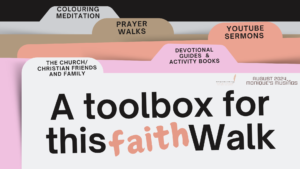
If you’re new here. Welcome. If you’re not, welcome back. My blog is where I try to collate musings on everything that makes me think for an extended period. I emphasize extended periods because, as a chronic overthinker, I truly think like whizzing tops move when spun—here, there, everywhere. Those who have access to my Whatsapp Status get the brunt of the spillover of thoughts. So, out of the abundance of my thoughts over the past few weeks, am I writing this? But wait, are you a Christian? I’m hoping you are. If so, the blog/vlog this month would be more enjoyable for you. If not, I hope you still read through and catch the vlog below. My personal conversion story is linked there, and that might interest you. Now to the topic at hand. You may have heard the adage: Christianity is a relationship, not merely a religion. Though a common adage I wish there was more emphasis on the relationship and less on the religion. I was born into a community and family where most would claim to be ‘Christian’. I was educated at a Presbyterian mission school. I was even ‘confirmed’ as a Christian at age 14 (I signed up for 1st communion classes so I could have family visit me with food on the day, lol). All this is to say, ‘I got the works’ when it comes to the Christian walk. And yet I didn’t. I only gave my life to Christ for myself after a failed suicide attempt in March of 2007. We have the crazy misconception that we choose God; we say things like ‘I found the Lord’. Nah, the Lord found me. And in this season, He has been growing my desire for Him in ways I can’t help but share here. That’s what this post is about: how that relationship/walk is going and what is helping me as I trek. Someone said, ‘Adulthood is where you find God for yourself.’ I would partly agree, but it’s not so much a ‘finding’ as getting to know Him and growing intimacy. I no longer go to church because I have to; I now want to go commune with fellow believers; it’s something I crave. I no longer pray out of habit- I don’t even know if I ever had that habit sef. My prayers now are like me getting up in the middle of the night with a dry throat in need of a drink. Life will make you thirsty for Him. He will make you thirsty for Him. There’s a movement from doing things because you think they’re right to do what you know is right for you at that time because of the Holy Spirit’s ushering. It’s a relationship, and it evolves with us. It looks differently across different times, and ours with him doesn’t look exactly the same as His with someone else. I feel a good gauge of one’s Christian state is how open one is to interrogation, how comfortable one is with one’s answers, and how much of it comes from oneself rather than what one has been told. Yeah, you want to memorize scripture. Why? And the answer should just be because the bible says, ‘Let’s have it on our hearts’ First of all, that isn’t proper exegesis of that scripture. Next, memorization didn’t save the Scribes and Pharisees from Jesus’ scorn, so… why do you (insert name here) want to read the bible cover to cover? Why do you want to go to church every Sunday? What do you truly believe and why? That is how God has been growing me in this season. Prompting me to prioritize the relationship. To think of him as a long-time partner. The one that walked up to me on that night in March 2007 and said, ‘Hey, I like you. Can we be a thing?’. We’ve done the talking stage; He’s courted me- all those easily answered prayers and countless blessings; he’s given tough love, and we’ve had several fights. But still, it seemed like my relationship was in a compartment of my life, and my worship was orchestrated, not free-flowing. So, like any relationship on the rocks, The Lover has been pushing for more work on intimacy, therapy, hard convos, date nights, and family meetings to resolve this wahala. That’s what I see my toolbox as. Products of all the ways He’s inspiring me to make the relationship one that knows no boundaries and flows freely. Can’t pray, that’s okay- couples are taught to sit in comfortable silences after a fight rather than walk away from each other. So even if you say nothing just sit there and let Abide meditation or several other medication videos play and the word pour over you as one person speaks. Is it hard to concentrate or be present during sermons or worship events because of ADD? No, wahala. There are Christian colouring books; you can use those as a mindfulness technique. Missed service because you’re travelling? Look up sermons on YouTube. Don’t understand this verse or that? The Bible can be like a maze—especially that Old Testament, lol. But you love research (on most days, lol), so go down the YouTube rabbit hole or use Bible study tools. I personally LOVE The Bible Project’s illustrative scripture exegesis. But there are so many great scripture teachers who can bless people’s understanding of specific things. Do you feel like proper meditation takes time, and you often end up ‘lost in it’, or it takes ‘too long’ to hear back from the Holy Spirit? Match the praying time to walking time. You’ll trick the mind that you’re doing something ‘productive’ and The relationship seems like a fake one because you’re talking to yourself. Organize gatherings with other Christians, it’s not a bible study but just Christian sisters hanging out eating scotch eggs, talking about everything and playing games connected by the same Lover. The point is, if its a relationship, it should feel
How has adulting ruined you?
July 2024 Musings In the past month, I finally got my hands on footage of an old interview I did in 2019. As I watched it, I couldn’t help but appreciate that a lot of my answers then were consistent with what I would say today; although I wish I had dressed up and seemed cheerful, my zeal and hope were by far stronger than current day and that came through. I plan on sharing that interview later. But for now, I want to write on what it inspired. Watching the video made me appreciate my younger self, and – as I often say- I owe all that I am to the zeal of younger Monique. Perhaps it’s the fact that I’m nearing 35, perhaps it’s the fact that I’m coming out of a protracted season of depression; either way, I often find myself thinking of how adulting turned out to be a ‘scam’. I know we say it often, heck we now have an anthem on the scam of adulting courtesy of a lovely Nigerian artist: Yet, I don’t think we really think we captured what made adulting a scam as we should in order to address the unfulfilment and unhappiness we feel. The phrase “adulting ruins things” is often used humorously or ironically to express the idea that the responsibilities and obligations of adulthood can take the fun out of life or make simple pleasures more complicated. We say “Adulting na scam” at Christmas, referring to how we no longer feel ‘merry’ given that we’re now the ones in charge of performing tasks and responsibilities to ensure the holiday goes smoothly. The suya is no longer sweet when you’re the one paying bills, and having a full house is no longer fun when you’re the one to juggle pick-ups and drop-offs along with other grown-up obligations. This is true, but honestly, it’s just the tip of the iceberg. I feel like Adulting being a scam is less about how responsibilities are now on us, and more about how those things have taken the place of things we felt were frivolous but actually necessary for balance and sustaining life. Mind you, I say this as someone who has fewer responsibilities than many in my circle and still feels like, ‘Nah, this is a scam’ on the regular. Consider your life now and how things were when you were a kid. What major differences come up for you? If you focus only on financial aspects, you’ll find that there are as many pros as cons: Yes, as an adult, you now have to decide what everyone eats for every meal, but also, YOU KNOW GET TO DECIDE WHAT EVERYONE EATS for every meal! As a kid, you craved that power. So what made it become a burden? The neverendingness, therein lies the scam. Adulting ruins things because we don’t get to pass the baton—especially if we’re doing life alone; and with communalism dying by the day, that is the case for most of us. We wanted to help in the kitchen as kids; toddlers are excited over something to do; I’ve watched my nieces fight over who got to carry my bag inside. It’s not just that they knew they would get praised for it (no one is praising you for the mundane as an adult), but it’s also that they opt for it, it’s still an option, not a duty. Adulting makes it a duty and saps the fun out of it. These are just some generic examples. I realize I must unlearn a lot of the ways adulting has changed me and ruined things. Adulting ruined my reading. I wrote about how I fell in love with reading (see here) and how words that others had written provided worlds for me to escape to. Reading provided comfort and peace and grew my empathy as well as my vocabulary. As much as I could blame social media for becoming my distraction in place of the world of fiction, that’s not quite true. It began with the ‘adult notion’ that my reading was only valuable if I was reading a certain kind of literature. The more I fraternized with other ‘adults’ in certain spaces, it became ‘childish’ to be re-reading the Romance and fantasy novels that made me fall for writing that soothed. I was challenged to read self-help books, ‘important’ books, ‘profound’ books. And the more I read what I felt like I should be reading as an adult, the more reading no longer appealed. I can’t say I was pressured; it’s more like a tacit societal expectation of what a successful adult does- reads books by successful people, books that ‘add’ to them. Not fiction. Not cartoons. Somehow that is less. I’m beginning to unlearn that. I like this quote that I came across on IG recently and feel it captures what I needed to hear when I started giving away my Nora Roberts to replace with ‘important books’. Adulting ruined my writing. One of the things I beat myself up about regularly is the fact that I don’t write as much as I know I should, as much as I know I could. I’ve shared in a previous blog what caused this. Yet, even knowing why I’m struggling with doing what I should/could, I still feel guilt regularly. The guilt of not living up to my potential, the guilt of not using a talent I’ve been gifted, etc., especially knowing that writing is as much a part of my employment/sustenance as it is my mode of self-realization, expression and art. I often think of the saying “if you don’t use it, you’ll use it” with fear, “Will I lose this gift eventually? But then I overthink. During a recent bout of guilt-infused overthinking about how I am ‘failing’ at writing even the things that are obviously ‘for me’ such as this blog. I took a step back to reflect on my whys: Q. Why did you
Mid-year Reflections: A look back and A look forward…
Dear Readers, You’re cordially invited to do some mid-year reflection with me. This month in 2021, I was battling with suicide ideation. This same month last year, I signed a covenant with God concerning my life, vowing never to express/act on my desire to take my life again. There’s been a lot of work between those years: therapy, vulnerability, medication, support from friends and growth. I don’t take it for granted that I have access to these things, yet I don’t want to give the impression that things are now ‘completely fine’. I still struggle mentally; just this past week, getting out of bed was somewhat of a struggle because hormones will hormones. Besides, as I’ve expressed in previous blogs- mental health struggles are often struggles you’ll have to overcome by walking through, not skipping over. It might never be erased completely, but hopefully, we will get to where we can deal with the ish with healthy coping mechanisms daily. That brings me to the reason for this post. I’m honouring the significance of this day in previous years by reflecting on how far I’ve come. Even though I still have regular lows, I must acknowledge that I have come from the person who saw nothing to live for in 2021 to the person who surrendered decision-making power on whether/when/how they live or die to God in 2023 and to this person who now has an updated bucket list of experiences they want to live out and an elaborate list of aspirations they are dreaming of. If that’s not a testimony, I don’t know what is. So, join me in thanking God and by reflecting on how you are, too. You may not be battling similar issues as I am, but I trust life gives all of us baggage to deal with. In recent times, I’ve found that being an adult, the awareness of all that needs to be done, all that is wrong, and the fatigue from the never-ending hustle and battling the same-ish for so long makes appreciating little things like the colour of the sky difficult. This is why reflection, like meditation, is a practice I want to do more of: ‘ touch the grass’ and take stock more holistically. But then, I’m an overthinker, so this might be something I’m prone to do- self-interrogation. Anyway, you’re invited to join me. I have curated a list of questions below for mid-year reflection, which I invite you to answer along with me. I answer the questions in the video embedded below. I’ll go first… Now, don’t be shy; tell me how your responding to the above questions went.
May 2024 Musings: Of travelling and choosing home
This past May, I had my first-ever real vacation.As in, the reason on my visa application was written out clearly as VACATION/TOURISM. There was no conference or work trip I was going for and I would then benefit from for some extra days of visiting… this was deliberately planned enjoyment! Such a win for the Year of No and doing less! I must say getting a visa with the reason being ‘vacation’ felt like a huge win; although there was a small “chakara” (pidgin for upheaval) during the interview and a minute where it seemed like family history would affect the decision, the final decision was positive and made me feel like “finally, these people know I don’t want to go and stay in their country sef!” Previous academic travel history and tendency to return home finally counted for something. Anyway, I got the visa, took all my annual leave days and planned to deliberately enjoy for a month in the U.S. As with any life event, there were lessons to be drawn from this U.S. Trip I thought to share. Unlearning is required for rest. We should all aspire to have American Audacity Choosing Home As I write these lessons from vacation, I think the last line of the above point is the real takeaway. Rest and travel are such a privilege that must be appreciated; you can only really “choose home” when you’ve had an option. You can only truly rest when you’re not actively being oppressed. In honour of those who can’t live fully, whose life was taken from them too soon, whose access has been denied, who are trapped. Please live. Don’t cut off your own wings, don’t limit yourself.